SAINTCON 2026
What social engineers know about you that your security team doesn't
Thanks for coming to the talk. Here are the slides, the questions to take back to work, and the studies behind them.
The idea in brief
Social engineers don’t find vulnerabilities in systems. They engineer states in people: urgency, authority, emotion, and helpfulness. A lot of awareness training leans on the same levers, so it teaches people to react instead of think.
The alternative is reflective curiosity: the pause that asks whether a message makes sense, plus a report channel that feels safe to use.
Three questions for any awareness campaign
- Which cognitive state is this training designed to produce?
- Does that state feed urgency, authority, emotion and helpfulness, or build reflective curiosity?
- What would a malicious social engineer think of this training?
Two questions for the moment a message arrives
- Does this fit my life?
- Who wants me to hurry?
The studies
- Lain, Kostiainen and Čapkun, “Phishing in Organizations: Findings from a Large-Scale and Long-Term Study”, IEEE S&P 2022.
- Ho et al., “Understanding the Efficacy of Phishing Training in Practice”, IEEE S&P 2025.
- Rozema and Davis, “Anti-Phishing Training (Still) Does Not Work”, arXiv 2506.19899, 2025 preprint.
- Pan, Yang, Cole, Wilson and Woodard, “Psychology of Phishing Emails: Quantifying Persuasion Principles and Simulating Detection with Large Language Models”, Expert Systems with Applications, 2026.
- Jensen et al., “Training to Mitigate Phishing Attacks Using Mindfulness Techniques”, Journal of Management Information Systems 34(2), 2017.
For teams
Want to play this with your team?
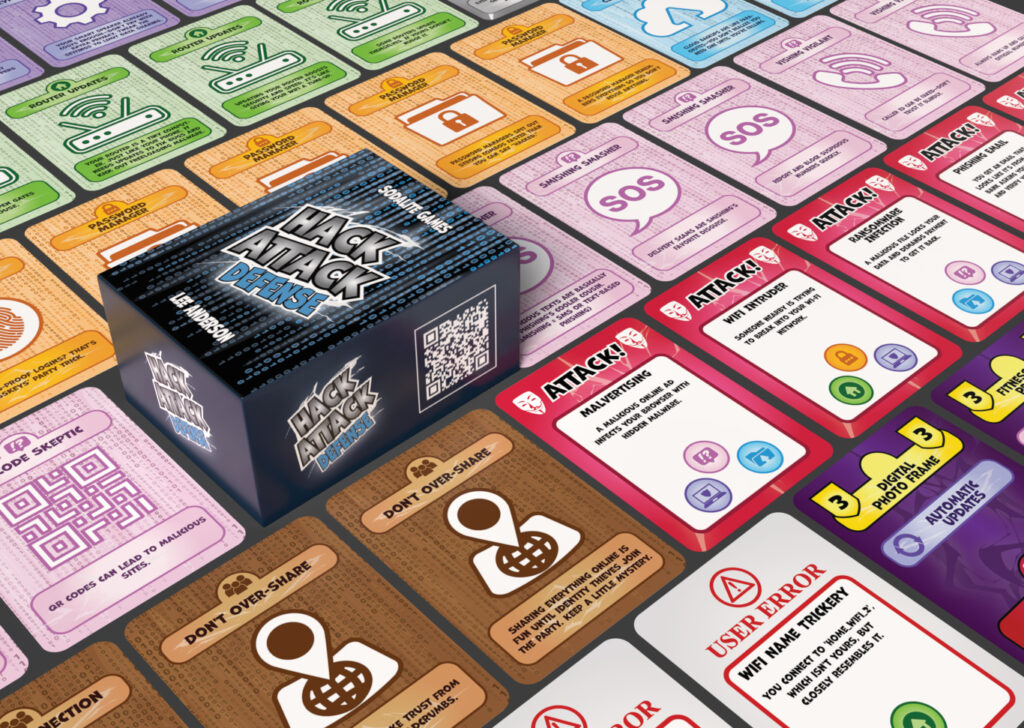
I run Hack Attack: Defense as a team session for companies. Your people play a round, then we talk through what happened and what they’d do differently at work.